Special Topic · Industry Innovations
The swine veterinary sector is shifting from treating diseases only after symptoms appear to a multi-layered approach to herd health management:
biosecurity, barn data monitoring, targeted diagnostics, appropriate vaccination, and precise treatment when necessary.
Technology does not replace veterinarians; instead, it helps detect abnormalities earlier and enables more informed decision-making.
Compiled by: Saigon Vet
Updated: July 10, 2026
Reading time: approx. 8 minutes
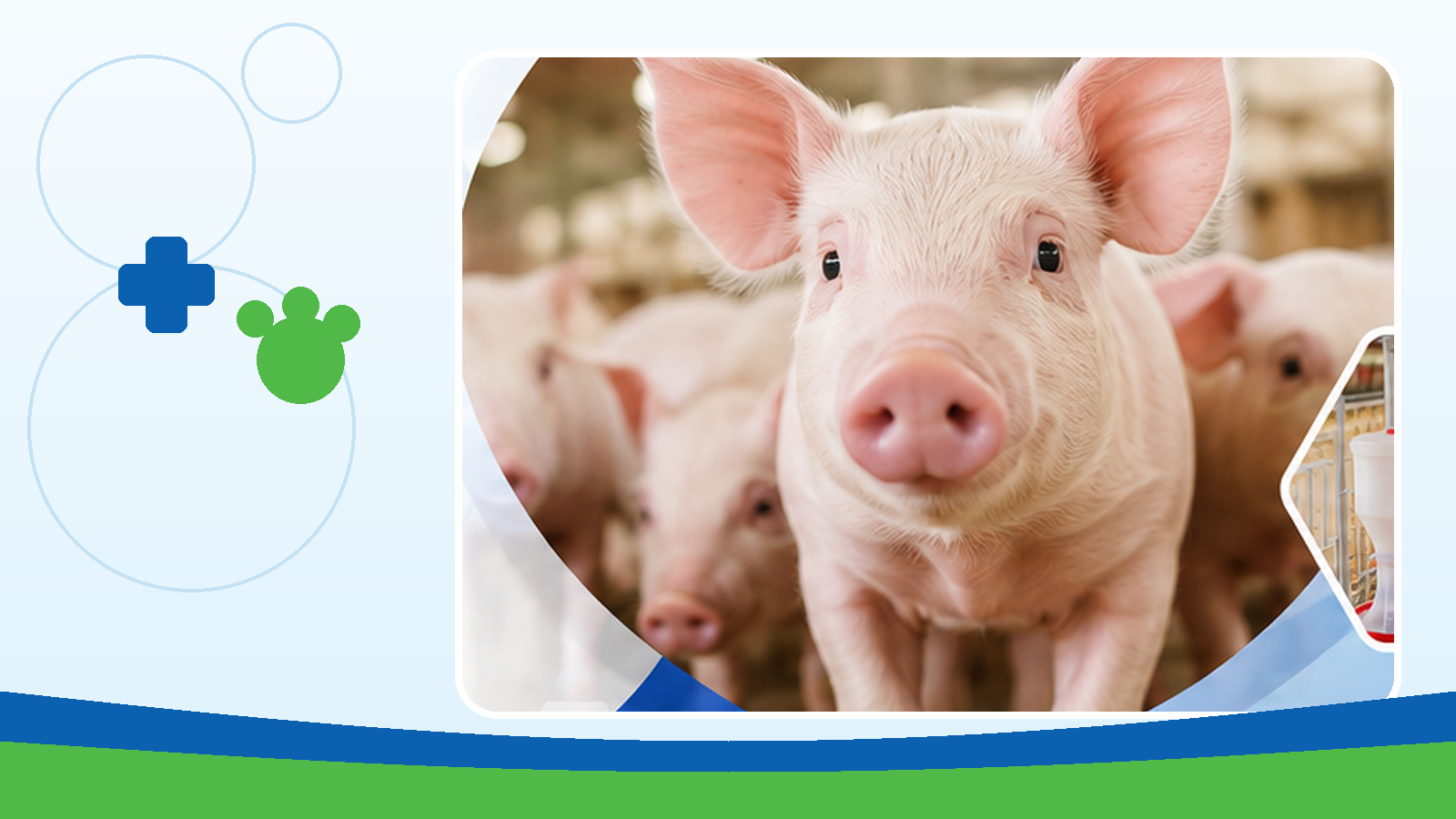 Swine herd health management is shifting from reacting to disease outbreaks
to proactive prevention, continuous monitoring, and early anomaly detection.
Swine herd health management is shifting from reacting to disease outbreaks
to proactive prevention, continuous monitoring, and early anomaly detection.
Three notable changes
01
BIOSECURITY
No longer just a checklist, it has evolved into a control system
managing livestock, personnel, vehicles, equipment, feed, and on-farm movement flows.
02
EARLY WARNING
Data on the environment, feed and water intake, imagery, behavior, and sound
help identify changes before clinical signs of disease become apparent.
03
PRECISION INTERVENTION
Vaccines, management adjustments, and veterinary medications are selected based on risk,
field assessments, testing, and herd response.
01
Swine herd management requires a whole-production-chain perspective
A pig farm is not a uniform group of animals.
Sows, suckling piglets, weaners, and finishing pigs
have different nutritional, immunological, and environmental needs,
as well as varying risk profiles.
A fluctuation in the sow unit can impact piglet quality.
An issue arising during the weaning phase can manifest later
as slow growth, high culling rates, or reduced feed efficiency.
Key innovation lies not merely in introducing a new product,
but in the ability to connect data across production stages,
identify anomalies, and intervene precisely where needed.
Do not wait until there is a marked increase in coughing, diarrhea, feed refusal, or mortality
before investigating the cause.
02
Biosecurity as the farm’s “operating system”
In pig farming, biosecurity must be maintained continuously,
rather than being stepped up only when disease outbreaks occur in the surrounding area.
The movement of people, vehicles, breeding stock, feed, supplies, and equipment
must be controlled based on risk levels.
External biosecurity
Preventing pathogens from entering the farm
Control incoming pigs, semen, feed, vehicles,
visitors, supplies, and pig-derived products.
Internal biosecurity
Limiting pathogen spread between zones
Segregate clean and dirty areas, use dedicated equipment,
follow specific care sequences, and manage sick pig areas.
Batch and zone management
Minimize unnecessary mixing
Organize herd entry and exit effectively, limit the mixing of pigs from different sources,
and maintain a cleaning period between production cycles.
Recording and monitoring
Turn procedures into daily habits
Monitor implementation, record deviations,
and adjust processes rather than relying solely on instruction sheets.
Effective biosecurity is not about the number of regulations,
but about ensuring those regulations are properly implemented every day.
03
Pig barns start “speaking” through data
In precision livestock farming, sensors, cameras, microphones,
and production data are used to detect changes in the herd over time.
These tools do not provide a diagnosis themselves,
but they can alert farmers when an inspection is needed.
Environment
Temperature, humidity, and ventilation
Continuous monitoring helps identify conditions that cause heat stress,
gas accumulation, or reduced herd comfort.
Consumption
Feed and water intake
A drop or unusual fluctuation can signal
a need for inspection, taking into account the pigs' age and health status.
Visuals
Herd posture and activity
Cameras can help detect changes in movement,
lying posture, herd distribution, or the activity of sows and piglets.
Sound
Coughing and unusual sounds
Sound analysis can help identify coughing
and changes related to respiratory health.
 Barn data helps identify when an inspection is needed.
Professional conclusions must still be based on on-site assessments and appropriate testing.
Barn data helps identify when an inspection is needed.
Professional conclusions must still be based on on-site assessments and appropriate testing.
Technology does not diagnose in place of the veterinarian;
it helps the veterinarian intervene sooner.
04
Diagnosis goes beyond simply naming the disease
Coughing, diarrhea, reduced feed intake, stunted growth, or increased mortality
can stem from various causes:
infectious agents, housing conditions, feed quality,
stocking density, stress, or a combination of factors.
Diagnostic tests are most valuable when interpreted within the context of the herd:
age, disease history, stock source, vaccination program,
timing of symptom onset, and environmental conditions.
| Approach based primarily on experience |
More evidence-based management approach |
| Assessment based on a single prominent symptom |
Consider herd history, pig age, environment,
field examination, and progression over time
|
| Inappropriate representative sampling |
Select the correct pig group, timing,
and sample type based on diagnostic objectives
|
| Assuming a positive result indicates the sole cause |
Cross-reference test results with clinical signs,
lesions, and herd epidemiological status
|
| Constantly changing medication before seeing results |
Monitor response over an appropriate period
and re-evaluate the diagnosis
|
| Failure to keep disease and treatment records |
Record products used, treatment regimens, responses,
and withdrawal periods
|
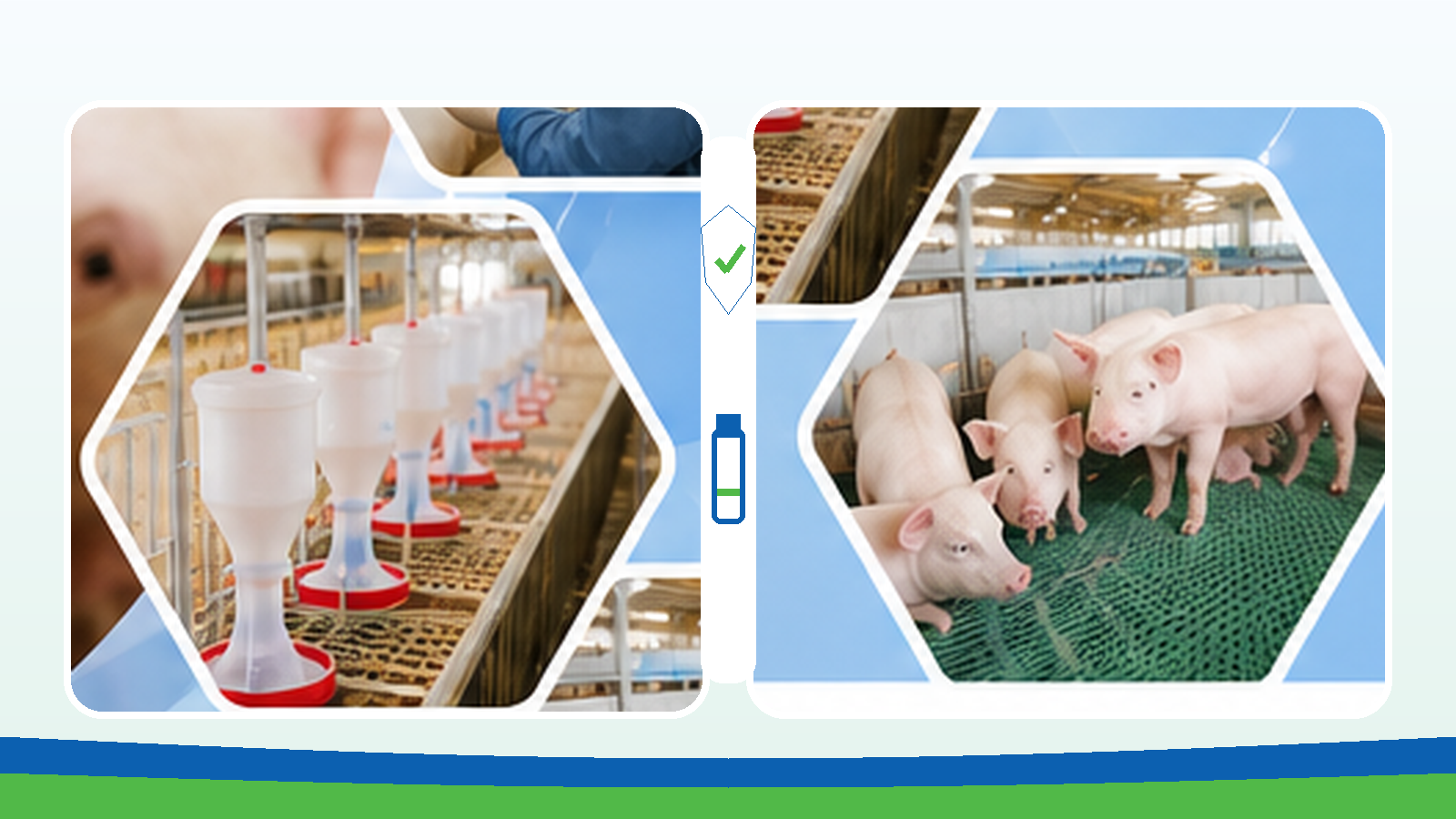 Field inspections, targeted sampling, and biosecurity control
lay the foundation for appropriate prevention and treatment decisions.
Field inspections, targeted sampling, and biosecurity control
lay the foundation for appropriate prevention and treatment decisions.
05
Shifting from a "fixed schedule" to a "tailored program" for vaccination
Vaccination is a crucial preventive measure for diseases where suitable vaccines exist.
However, efficacy depends not only on the timing of administration
but also on the herd's immune status,
the source of replacement stock, storage conditions,
administration techniques, and the level of compliance at the farm.
Before developing the program
Assessing farm risks
Review disease history, breeding stock sources,
herd entry patterns, and stages where issues commonly arise.
During implementation
Controlling administration quality
Monitor the cold chain, dosage, administration method,
equipment, and correct identification of pig groups.
Post-implementation
Evaluating actual performance
Monitor clinical signs, growth,
culling rates, and medication usage across batches.
When conditions change
Adapt rather than stay the course
The program should be reviewed when changing the source of stock,
altering the scale of operations, or if actual performance falls short of targets.
06
Antibiotics remain necessary when bacterial infections occur
Antibiotics do not treat viral diseases.
However, when the herd contracts a bacterial infection
or develops a secondary bacterial infection,
appropriate medication remains a vital treatment tool
for safeguarding animal health and welfare.
The goal is not to delay treatment at all costs,
but to reduce unnecessary use and improve decision-making quality:
correct indication, right product, right dosage, right route of administration,
right duration, monitoring of response, and adherence to withdrawal periods.
A Balanced Approach
Do not use antibiotics as a substitute for biosecurity,
vaccination, or proper housing management.
At the same time, do not let the goal of "reducing antibiotic use"
delay treatment when the herd is genuinely suffering from a bacterial infection.
07
African Swine Fever: Prioritizing Disease Prevention and Surveillance
African Swine Fever necessitates strict controls
regarding animals, vehicles, clothing, footwear,
equipment, feed, and pig-derived products.
Prevention
Control Entry Points
People, vehicles, breeding stock, feed, and equipment
must be managed according to specific risk levels.
Surveillance
Do Not Ignore Abnormal Signs
Increased mortality, fever, loss of appetite, or unusual developments
must be reported and assessed promptly.
Response
Restrict Movement When Suspected
Avoid moving pigs, equipment, or supplies to other areas
before the cause has been verified.
Improvement
Post-incident review
Identify process breakdowns,
update workflows, and retrain personnel.
08
Five-layer swine health management model
01
Prevention
Biosecurity, vaccination, nutrition,
environment, and herd management.
02
Monitoring
Feed and water intake, temperature,
ventilation, behavior, and sounds.
03
Verification
Field inspections, selection of representative pigs,
sampling, and appropriate testing.
04
Intervention
Management adjustments, health support,
and medication when indicated.
05
Evaluation
Recording responses and improving the program
for the next production cycle.
Conclusion: Connecting disease prevention, data, and clinical decision-making
The future of swine veterinary medicine does not lie in replacing humans with sensors
or substituting treatment with a single, all-encompassing solution.
True value lies in the ability to integrate biosecurity,
barn data, diagnostics, vaccines, and treatments
into a unified management system.
When abnormal signals are detected early,
managers and veterinarians gain valuable time
to investigate causes, adjust barn conditions,
contain risks, and select appropriate solutions.
Proactive disease prevention – Continuous monitoring –
Evidence-based diagnosis – Targeted intervention when needed.
Professional Note:
The content of this article is intended to provide scientific information
and does not replace diagnoses, prescriptions, or treatment guidelines
provided by veterinarians and animal health experts.
The use of vaccines, veterinary medicines, and antibiotics
must comply with product specifications, current regulations,
and required withdrawal periods.
References
-
World Organisation for Animal Health:
African swine fever.
-
World Organisation for Animal Health:
Responsible and prudent use of antimicrobial agents
in veterinary medicine.
-
Specialized studies on precision livestock farming,
and the monitoring of images, sound, and behavior in pig farming.
Compiled by: Saigon Vet, July 2026.
Content synthesized and interpreted from professional sources.
When citing, please credit saigonvet.vn.