Industry Focus · Innovations in the Sector
Vaccines, biosecurity, and housing management remain the cornerstones of disease prevention.
A new development in the poultry industry is the ability to integrate environmental, acoustic,
and visual data with diagnostic testing to detect abnormalities earlier, while ensuring
antibiotics are used appropriately when bacterial infections occur.
Compiled by: Saigon Vet
Updated: July 10, 2026
Reading time: approx. 8 minutes
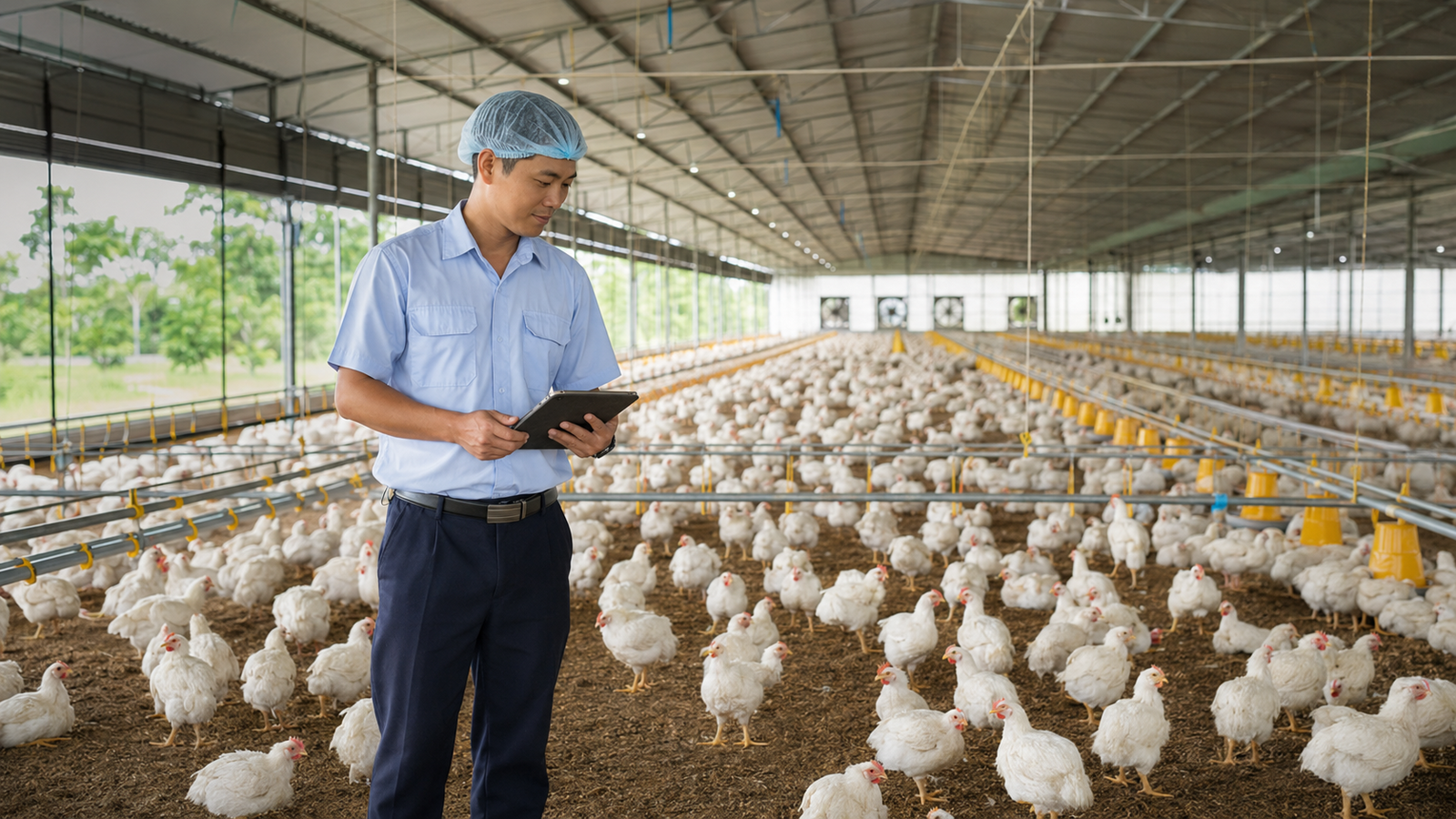 Poultry health management is shifting from reactive measures taken after disease outbreaks
toward proactive prevention and early detection of abnormalities.
Poultry health management is shifting from reactive measures taken after disease outbreaks
toward proactive prevention and early detection of abnormalities.
Three notable changes
01 · DISEASE PREVENTION
Vaccination is integrated into a comprehensive program comprising surveillance, biosecurity,
and immune efficacy assessment.
02 · EARLY WARNING
Data on temperature, humidity, feed and water intake, as well as images and sounds,
help detect changes before symptoms become apparent.
03 · TREATMENT
Antibiotics remain necessary for bacterial infections but must be selected and used
based on professional assessment.
01
In poultry farming, early detection determines the effectiveness of control measures
Poultry are typically raised in large flocks with rapid production cycles. Minor changes in
temperature, ventilation, drinking water quality, feed intake, or activity levels can
quickly affect many individuals within the same housing unit.
Therefore, a key direction for innovation is not merely acquiring new drugs or vaccines, but also
detecting abnormal signals earlier and accurately identifying the cause before selecting a solution.
Do not wait until the poultry flock shows clear signs of disease before taking action.
02
Vaccination is shifting from "adherence to schedule" to "proven effectiveness"
Vaccines are among the most important disease prevention tools in the poultry industry. However,
the effectiveness of a program depends on more than just administration on the correct day. Factors
such as vaccine selection, storage, application methods, the flock's immune status, and
compatibility with circulating pathogens all influence actual outcomes.
At the 2025 Asia-Pacific poultry disease control conference, WOAH emphasized that
vaccination must be accompanied by surveillance, biosecurity, movement control, and monitoring
of pathogen evolution. For avian influenza, RT-PCR remains a crucial tool for monitoring
both vaccinated and unvaccinated flocks.
[1]
Key Takeaway
The goal is not to increase the frequency of vaccination, but to design a program tailored
to epidemiological risks and to verify its effectiveness after implementation.
03
Livestock barns start “speaking” through data
In precision livestock farming, data from environmental sensors, feed and water intake monitors,
cameras, and microphones are used to detect changes within the flock. These signals do not
provide a diagnosis on their own, but they alert farmers and technical specialists when an inspection is needed.
ENVIRONMENT
Temperature, humidity, and ventilation
Continuous monitoring helps identify conditions that could cause stress,
lower immunity, or affect the flock's feed utilization.
CONSUMPTION
Feed and water intake
Abnormal fluctuations in feed or water consumption can serve as a signal
warranting further investigation alongside other data.
VISUALS
Flock distribution and activity
Cameras can help detect unusual clustering, reduced movement,
or behavioral changes within the barn.
SOUND
Respiratory signal alerts
New research is developing models to recognize coughing and abnormal sounds,
helping to provide early warnings of respiratory issues in chickens.
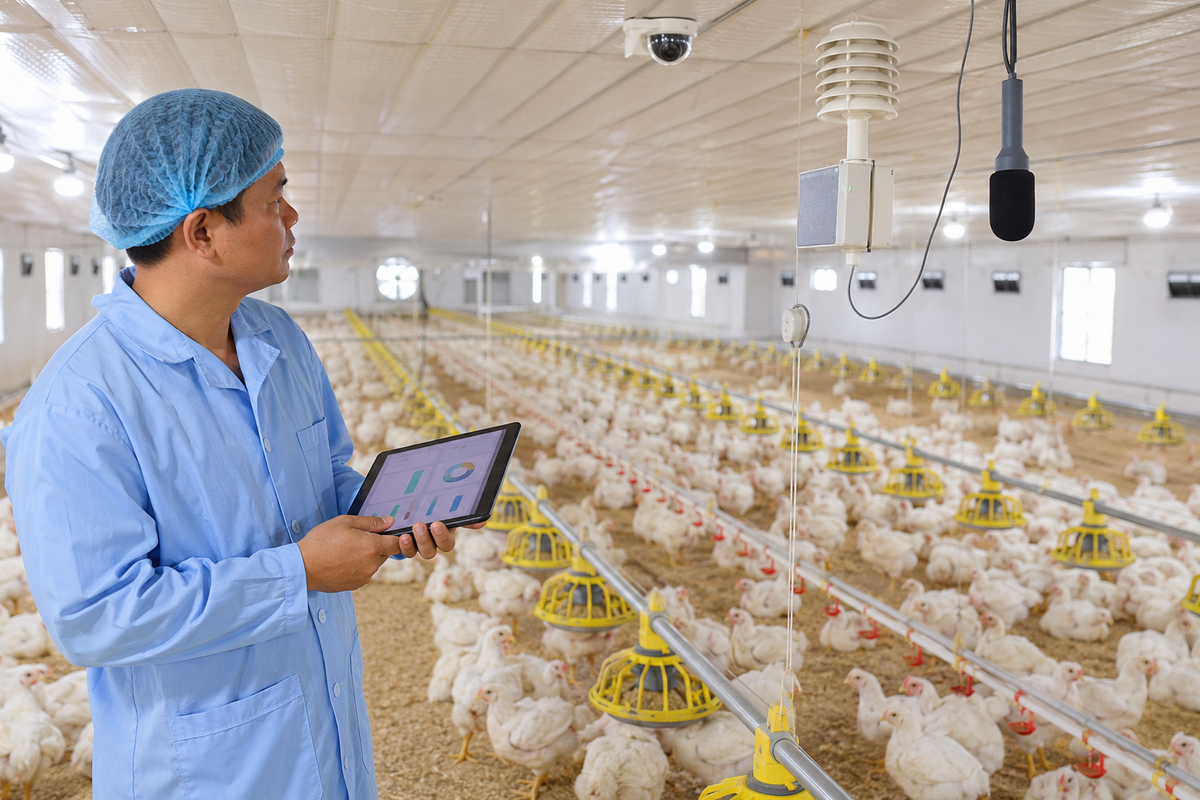 Data from the poultry house aids in early detection, yet professional conclusions must still
rely on field inspections and appropriate diagnostic testing.
Data from the poultry house aids in early detection, yet professional conclusions must still
rely on field inspections and appropriate diagnostic testing.
A study published in Frontiers in Veterinary Science in 2026 developed
an automated system to detect chicken coughing sounds, facilitating early warnings within the housing environment.
While this technology demonstrates the potential of non-invasive monitoring,
it still requires validation under specific production conditions.
[2]
Technology does not diagnose in place of a veterinarian; it helps the veterinarian arrive sooner.
04
Rapid diagnosis enables more accurate solution selection
Respiratory or digestive symptoms, or a drop in productivity, can stem from various causes.
Therefore, assessment requires integrating flock history, vaccination programs, environmental quality, field examinations,
and targeted sampling.
Molecular testing can help identify specific viral agents, while culture and antimicrobial susceptibility testing can
assist in drug selection when bacterial disease is suspected. Test results must be interpreted
within the context of the flock's actual situation, rather than in isolation from observations made in the poultry house.
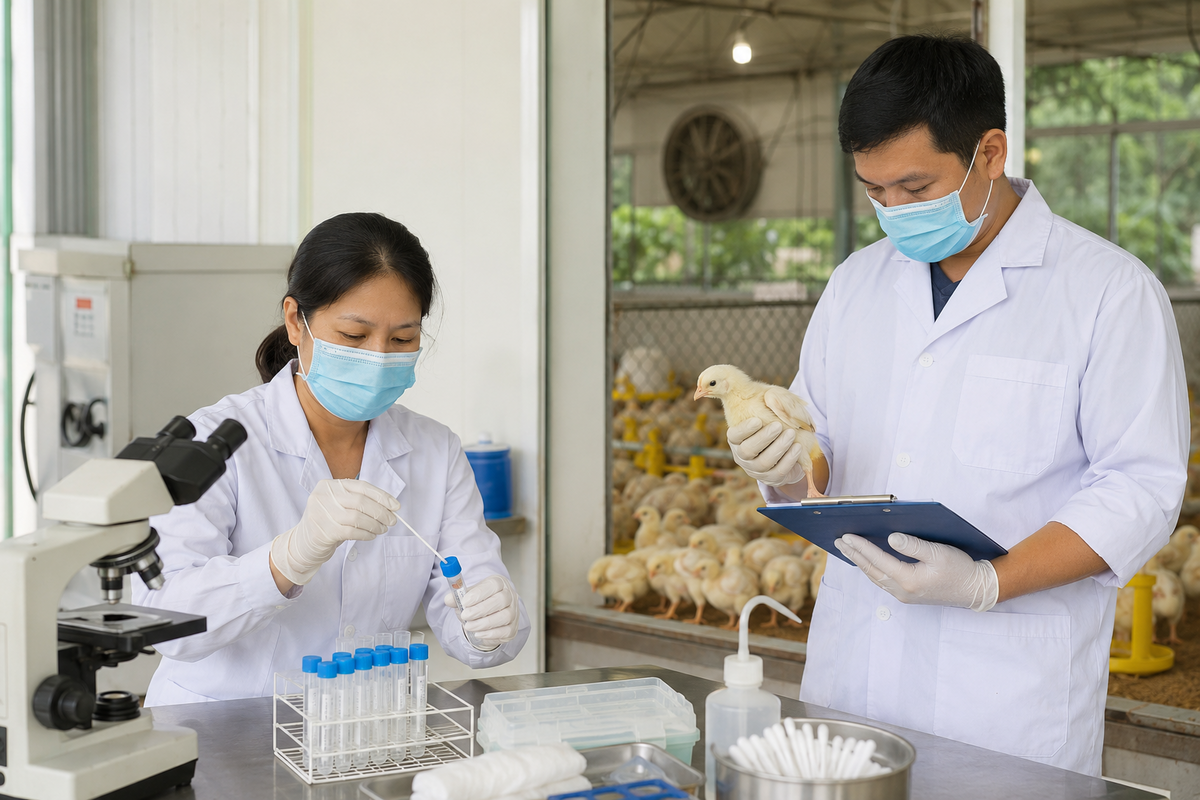 Diagnosis, sampling, and vaccination program evaluation provide the basis for appropriate prevention and treatment decisions.
05
Antibiotics remain necessary when bacterial infections occur
Antibiotics are ineffective against viral diseases. However, when a poultry flock suffers from a bacterial
infection or develops a secondary bacterial infection, appropriate antibiotics remain an essential treatment tool
to protect flock health and minimize losses.
WOAH asserts that discontinuing antibiotic use when there is a clinical need for treatment is not an appropriate option.
What requires control is overuse, misuse, or use not based on professional assessment. Antibiotics
must be used according to the correct indications, treatment regimens, and withdrawal periods.
[3]
A balanced perspective
Do not delay treatment simply to meet a goal of "using fewer antibiotics." The correct objective is effective disease prevention,
accurate diagnosis, and appropriate antibiotic use when truly necessary.
06
Biosecurity is more than just a checklist
Effective biosecurity must be organized as a continuous system, covering everything from breeding stock, feed, and water,
to the entry and exit of personnel and vehicles, waste and carcass disposal, and barn downtime.
INPUTS
Breeding stock and supplies
Control sources, health status, and transport conditions prior to farm entry.
MOVEMENT
People, vehicles, and equipment
Separate clean and dirty zones; ensure sanitation and limit the transfer of pathogens between areas.
HOUSING
Air, water, and litter
Manage factors that increase stress or facilitate the survival and spread of pathogens.
POST-FLOCK
Cleaning and review
Clean, disinfect, maintain a downtime period, and review data from the previous flock.
The FAO and WOAH Global Strategy for the Control of Highly Pathogenic Avian Influenza (2024–2033)
views vaccination, surveillance, and biosecurity as complementary tools. Improving biosecurity
and vaccination also contributes to reducing the need for antimicrobials.
[4]
07
Vietnam's experience: disease control must go hand-in-hand with food safety
Linking two layers of surveillance
Vietnam's report at the 2024 WOAH workshop indicates that avian influenza requires
continuous surveillance and control. This necessitates coordination among vaccination,
epidemiological surveillance, biosecurity, and rapid response capabilities when
anomalies are detected.
[5]
In addition to on-farm disease control, monitoring for antimicrobial-resistant bacteria and hygiene
along the food chain are also components of the One Health approach.
A study published in late 2025 examined Escherichia coli on the shells of chicken, duck, and quail eggs
sold in Can Tho. The results identified ESBL-producing and multidrug-resistant strains in a portion of the samples,
while no E. coli was detected in eggs sourced from supermarkets. These findings highlight the importance
of hygiene and supply chain control but do not represent the entire Vietnamese poultry industry, nor should
they be used to infer on-farm treatment protocols.
[6]
08
Five-layer poultry health management model
01
Disease Prevention
Vaccination, biosecurity, nutrition, and housing environment.
02
Monitoring
Environmental data, feed and water intake, imagery, and sound.
03
Verification
Field inspections, flock assessment, sampling, and appropriate testing.
04
Treatment
Selecting the right solution; using antibiotics only when justified and truly necessary.
05
Evaluation
Recording responses and refining the program for the next production cycle.
Conclusion: Integrating prevention, data, and treatment
The future of poultry veterinary medicine does not lie in replacing humans with technology or
substituting antibiotics with vaccines. The true value lies in the ability to integrate disease
prevention, early-warning data, diagnostics, and treatment into a unified system.
When anomalies are detected early, specialists have more time to assess causes, adjust
housing conditions, and select appropriate solutions. Consequently, antibiotics retain their
role as an essential therapeutic tool rather than becoming a substitute for proper flock management.
Proactive disease prevention – Early detection – Evidence-based diagnosis – Appropriate treatment when necessary.
Professional Note:
The content of this article is intended to provide scientific information and does not replace the diagnosis, recommendations, or treatment instructions of veterinarians and animal health specialists. The use of vaccines, veterinary medicines, and antibiotics must comply with product specifications, current regulations, and withdrawal periods.
Compiled by Saigon Vet, July 2026.
The content has been synthesized and interpreted from the professional sources linked above; it does not verbatim copy
third-party articles. When citing this material, please credit saigonvet.vn.