Science News
Withdrawal Period: A Crucial Link in Safeguarding Food Safety
Proper treatment makes livestock healthier. But in food animal production, a medical intervention is only truly complete when the farm strictly complies with withdrawal periods, maintains clear logs, and carefully manages market times.
In previous posts, we discussed the role of antibiotics in livestock farming, how to use them responsibly, and why mass "preventative" antibiotic use in healthy herds is highly discouraged.
Yet there is a fundamental element that is often overlooked: the withdrawal period. In food animal farming, the story doesn't end with a recovered animal. The critical follow-up question is: after medication, when can the livestock or their products safely enter the food chain?
Treatment
Correct administration
Targeting the right disease with the right drug, proper dosage, proper duration, and following label instructions.
Safety
Correct withdrawal
Calculating the period precisely from the final dose and withholding marketing until the safety threshold is met.
Governance
Correct logging
Knowing exactly which group was treated, the date of the last dose, and the earliest safe date for market release.
Core Concept
What is a withdrawal period?
Simply put, the withdrawal period is the mandatory waiting time required after the final dose of a medication before the livestock or their products (such as meat, milk, or eggs) can be sold, slaughtered, harvested, or introduced into the food chain.
This timeframe varies significantly based on the specific drug, active ingredients, dosage, route of administration, species, and the harvested product (meat, eggs, or milk). Therefore, it should never be guessed based on general experience; always consult the exact product label.
Why is the withdrawal period vital?
When livestock are treated with veterinary drugs, traces of the active compound can remain in their bodies for a specific duration. The animal's system requires this time to metabolize and excrete the residues down to federally established safe levels.
If animals or their products enter the market too early, the risk of drug residue increases. This not only threatens consumer health but also damages the reputation of the farm, buying agents, manufacturers, and the entire livestock supply chain.
The withdrawal period bridges treatment and food safety
A farm practicing responsible antibiotic use does more than administer the correct drug at the proper dose and schedule. That farm must also rigorously honor the withdrawal period.
The withdrawal period is not a "minor footnote" on the label
Indications
Specifies which conditions or pathogens the drug is intended to treat.
Dosage
Defines how much to administer under specific circumstances.
Administration
Outlines whether to use injection, drinking water, feed mixing, or other routes.
Treatment Duration
Details how long the treatment should last before re-evaluation is needed.
Withdrawal Period
Ensures you know precisely when products can safely enter the food supply.
Common errors in managing withdrawal times
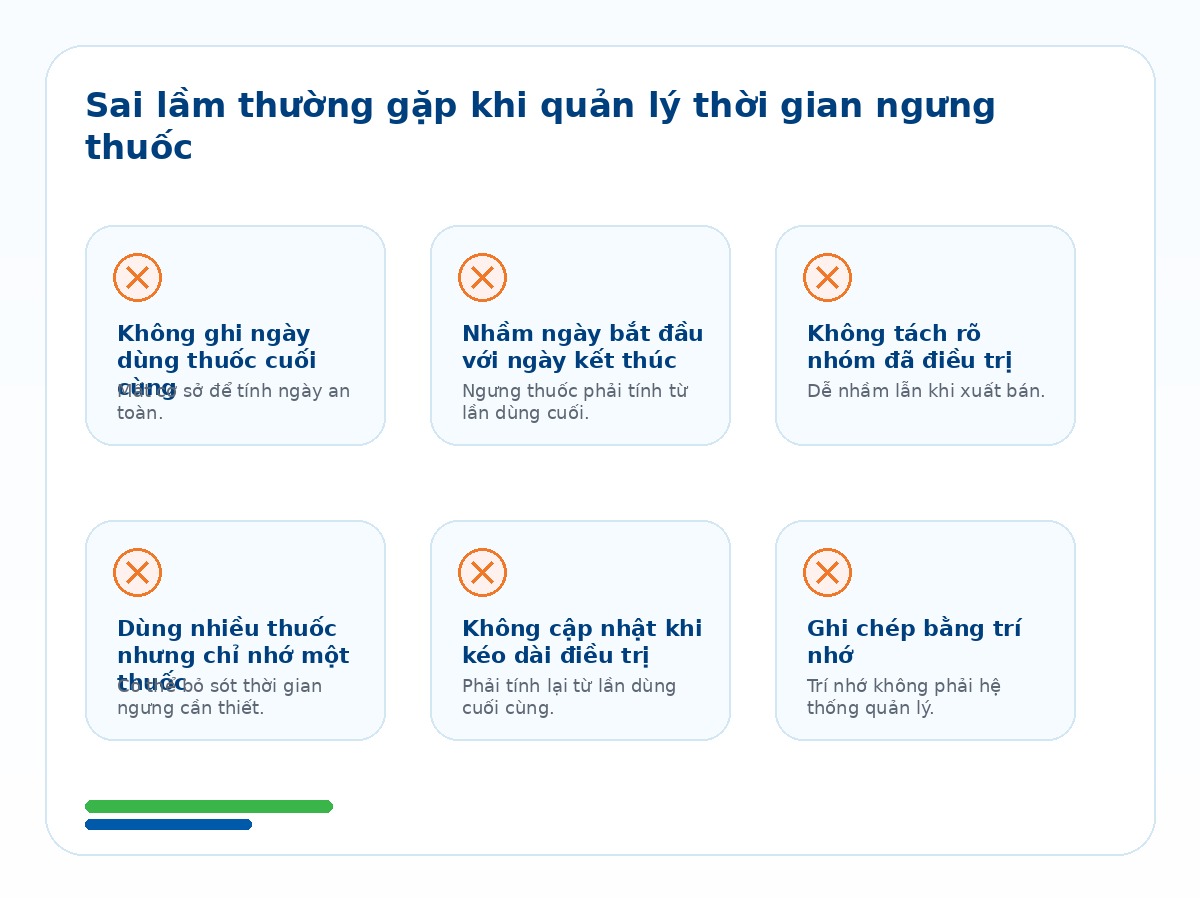
Though the concept of withdrawal periods is straightforward, execution errors are frequent due to poor recording and management on-farm. Common mistakes include failing to log the final treatment date, confusing the start of treatment with the end, and failing to segregate treated animals from untreated ones.
Another failure point is administering multiple medications but tracking only one, or failing to adjust the release date when treatment is extended. Relying on memory is not a reliable system, particularly for operations managing multiple groups, pens, and market schedules.
Practical on-farm withdrawal management
Keep clear records so every handler knows which groups are under observation
A basic treatment card should clearly list: treatment start date, final dose date, product name, active ingredient, species, pen/group ID, dosage, route of administration, administrator, label-indicated withdrawal period, and the earliest safe date for market release.
For larger facilities with numerous pens, utilizing pen-side cards, color-coded tags, tracking sheets, or symbols on the barn map can significantly prevent critical sorting errors.
Don't let market dates dictate medical treatment
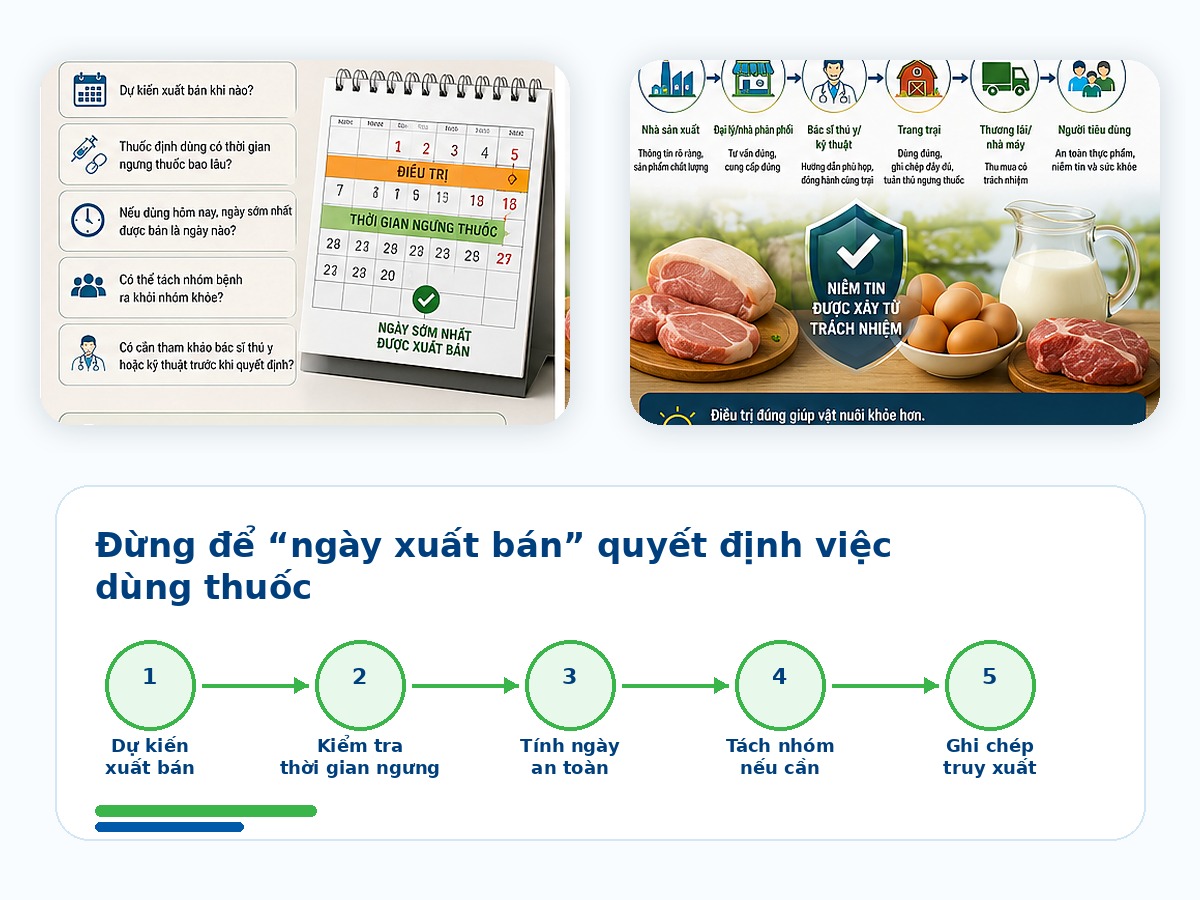
Another critical pitfall is administering treatments near market age without factoring in the withdrawal period. Treating without checking the label puts farms in a difficult position: either delay marketing (and incur additional costs) or risk violating food safety standards.
Before treating a group near market size, ask: When is this group scheduled for sale? What is the withdrawal period for the proposed treatment? If treated today, what is the earliest safe marketing date? Can we isolate the sick animals and treat only them while letting the healthy ones market on schedule?
Withdrawal periods vary across meat, eggs, milk, and species
Correct species
A product approved for one species does not translate to safe or identical use in another.
Correct product type
Meat, eggs, and milk process residues differently, meaning safety guidelines vary accordingly.
Correct labeling
Carefully read target species, warning labels, withdrawal times, and special instructions.
Correct technical advice
If labels are unclear or the situation is complex, always consult a veterinarian or technical expert.
Record-keeping protects your farm during audits
Documentation is not just for memory; it is for verification. When buyers, processors, distributors, or regulatory agencies request treatment histories, your farm must be ready to deliver accurate data.
A robust treatment record answers: Which drugs were used? On what dates? For how long? Who administered them? In which pens? Was the withdrawal period fully met? Are there specific batches that need segregation?
Farm Management Perspective: For farms striving for professional-grade development, maintaining treatment logs and tracking withdrawal periods must be viewed as a mandatory operational record, not an optional task for spare time.
The withdrawal period is a collective supply chain responsibility
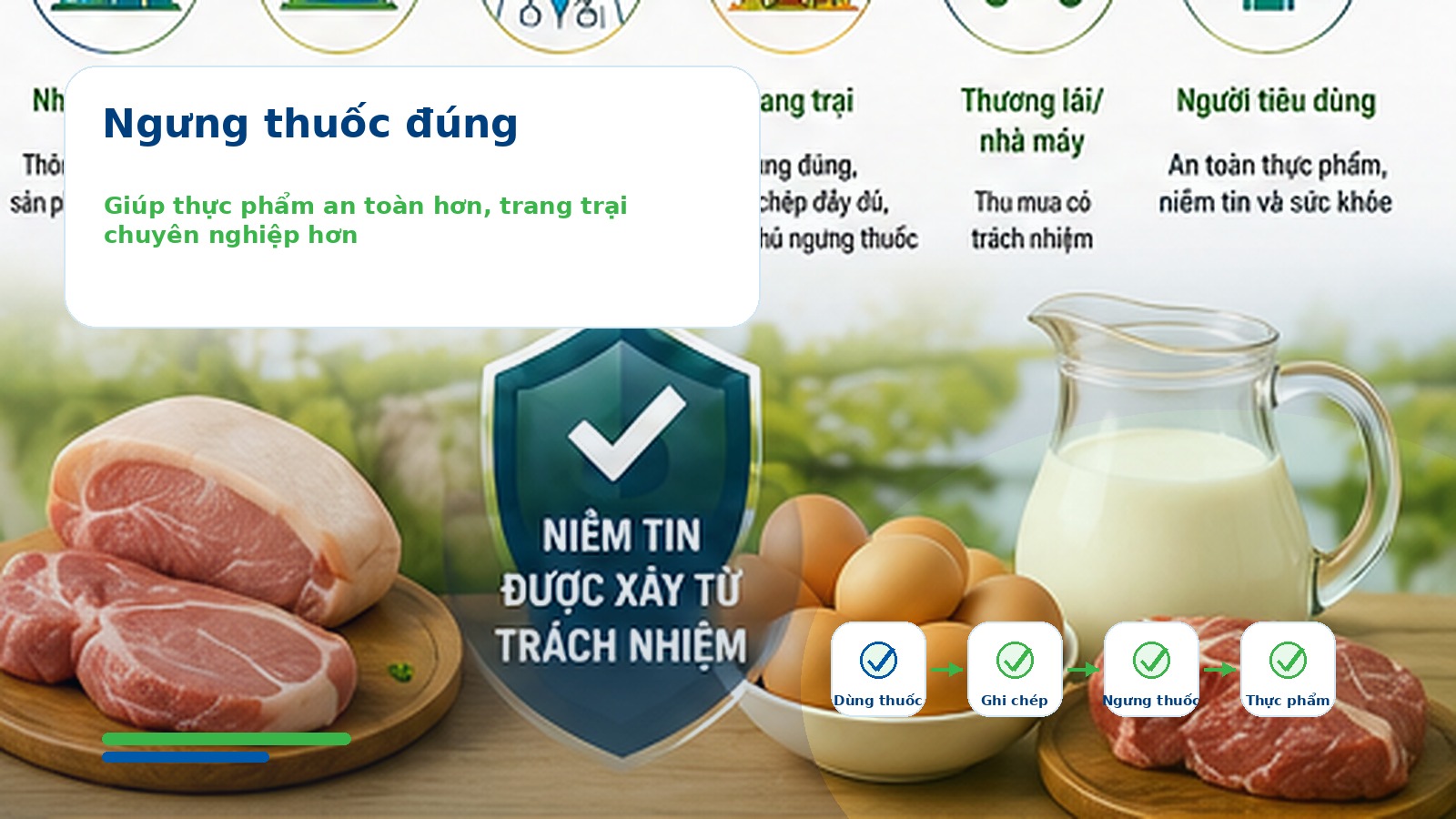
Food safety does not rely on a single individual. It is a collaborative chain of responsibility: pharmaceutical manufacturers, distributors, veterinarians, technical specialists, farms, buyers, processing plants, retail outlets, and final consumers.
Manufacturers
Provide clear, accurate labeling and quality formulations.
Distributors / Techs
Deliver precise guidance and appropriate support.
Farms
Use correctly, log thoroughly, and honor withdrawal times.
Buyers / Processors
Uphold quality protocols and respect safety periods.
Consumers
Are protected by a responsible supply chain.
SaigonVet’s commitment to withdrawal safety compliance
As a veterinary pharmaceutical manufacturer, SaigonVet believes a great product is defined not just by its production quality, but by its safe implementation in the field. For our therapeutic classes, we ensure that indications, dosages, application methods, and withdrawal periods are communicated transparently.
SaigonVet Perspective: Antibiotics are only as valuable as their proper application. Using them correctly cures illness while simultaneously preserving food safety and maintaining public market trust.
Correct treatment yields healthier herds. Proper withdrawal ensures safer food.
The withdrawal period is not an optional detail; it is the vital connection between veterinary medicine and public food safety. When farms maintain accurate logs, adhere to label guidelines, and organize marketing dates, antibiotics function exactly as they should: as critical, highly effective therapeutic tools within a responsible livestock production system.